
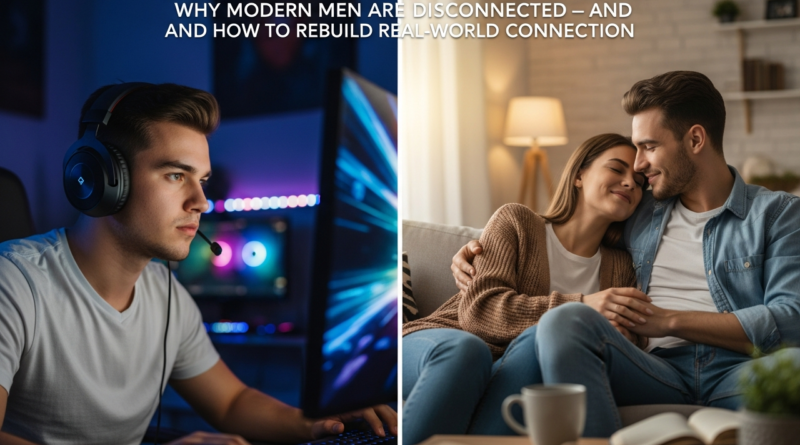
The Gamer’s Intimacy Gap: How Excessive Gaming Impacts Modern Men’s Relationships — And How to Rebuild Real-World Connection
If you grew up gaming, you’re not alone — an entire generation of millennial and Gen-Z men did.
From late-night LAN parties to online raid squads, gaming became more than just a hobby.
It became community. Identity. Escape. Dopamine. Comfort. Achievement.
For many men, gaming shaped how they bond, compete, unwind, express themselves, and even build friendships. And while gaming itself isn’t the villain — the imbalance is.
Today, more men than ever are quietly struggling with the Gamer’s Intimacy Gap — a widening disconnect between digital connection and real-world intimacy. It’s not something men openly talk about. But its impact shows up in relationships, social confidence, emotional regulation, and even sexual vitality.
This blog breaks down why this is happening, how gaming affects intimacy, and what modern men can do to rebuild connection without quitting what they love.
Why Gamers Are Struggling More With Intimacy Than Previous Generations
Gaming isn’t like it used to be. It’s no longer a 1–2 hour recreational activity.
It’s designed to be immersive, never-ending, reward-driven, and socially fulfilling — in ways real life can’t always compete with.
Here’s the core issue:
1. Gaming Gives Predictable Rewards — Relationships Don’t
Games reward you instantly:
- Level up
- Loot drop
- Achievement unlocked
- Social validation
Relationships, on the other hand:
- Need patience
- Require vulnerability
- Demand emotional presence
For a stressed-out man, gaming feels easier, safer, and more rewarding than navigating real-world intimacy.
2. Online Social Circles Replace Real Connection
Discord servers, multiplayer clans, and gaming squads give men:
- Brotherhood
- Shared goals
- Constant engagement
But these connections are often emotionally shallow — they don’t train the skills required for:
- conflict resolution
- emotional expression
- non-verbal communication
- physical intimacy
Meaningful relationships require depth — something online interactions can’t fully provide.
3. Gaming Becomes a Coping Mechanism for Stress
Entrepreneurship, high-pressure jobs, studies, and uncertainty push many men toward gaming as an escape.
Over time, dopamine overload from gaming reduces desire for:
- intimacy
- socialising
- romantic effort
- even sexual connection
The body becomes conditioned to seek pleasure from screens, not relationships.
4. Sleep Deprivation Lowers Testosterone & Libido
Late-night gaming sessions →
Low sleep →
Low testosterone →
Low desire, low energy, low confidence.
This isn’t just theory — hormonal studies show that missing even a few hours of sleep can significantly impact male sexual vitality.
5. Emotional Avoidance Becomes a Pattern
Gaming offers a refuge from:
- rejection
- criticism
- conflict
- emotional responsibility
But avoiding emotions creates a silent distance in relationships. Partners sense emotional unavailability, which leads to misunderstandings, erosion of trust, and eventually intimacy issues.
How Excessive Gaming Specifically Impacts Sexual Confidence
Sexual confidence requires presence, self-awareness, and emotional attunement — the exact faculties weakened by compulsive digital behavior.
Here’s how it affects sexual health:
✓ Lower libido due to dopamine exhaustion
✓ Performance anxiety due to reduced real-world socialisation
✓ Desensitisation due to overstimulation
✓ Reduced confidence & body awareness
✓ Weak mind-body connection
None of this means gaming is bad.
It simply means the balance is broken.
The Good News: You Don’t Have to Quit Gaming to Build Better Intimacy
You just need to rewire how you relate to it.
Here’s a powerful framework to help rebuild intimacy, confidence, and emotional energy — without giving up your lifestyle.
Level 1: Reclaim Your Energy (Biological Reset)
Before fixing intimacy, fix the foundation:
your nervous system, sleep cycle, hormones, and dopamine balance.
1. Set a Gaming Curfew
Stop at least 60–90 mins before bed.
Restores testosterone, sleep quality, and morning energy.
2. Replace One Gaming Session With Movement
Even 25 minutes of:
- walking
- stretching
- light weights
- yoga
helps boost libido and emotional regulation.
3. Create a “Recharging Ritual”
Something small:
- warm shower
- grounding music
- journaling
- herbal tea
This trains your body to reset after stimulation.
Level 2: Rebuild Intimacy Skills (The Human Connection Upgrade)
No gaming mechanic teaches real-world intimacy. These skills must be consciously built.
1. Practice Micro-Connections
Things like:
- short conversations
- eye contact
- staying present during interactions
These build confidence that later translates into deeper relationships.
2. Express Feelings in Small, Safe Ways
Start with:
- “Today was stressful.”
- “I need a break.”
- “I’m feeling low-energy.”
This slowly strengthens emotional presence — a vital ingredient in intimacy.
3. Learn How Your Nervous System Responds to Stress
Most gamers aren’t “emotionally unavailable.”
They’re overstimulated.
Learning grounding techniques reverses this.
Level 3: Create Healthy Boundaries With Gaming (Balance Mode)
Gaming becomes a problem only when it replaces life.
Try:
- Scheduled sessions instead of endless play
- Relationship-first zones (bed, sofa, dining table = no screens)
- Weekend intimacy hours for partners
- One screen-free night per week
Small boundaries make huge differences in sexual desire, energy, and mental clarity.
Level 4: Strengthen Real-World Intimacy (Co-Op Mode)
When emotional closeness increases, sexual confidence naturally returns.
Here’s how to build it:
1. Shared Rituals
Cooking together, taking walks, watching a series — consistency builds connection.
2. Verbal and physical reassurance
Compliments, affection, simple touches restore chemistry.
3. Emotional de-escalation
Instead of shutting down:
- pause
- breathe
- explain what’s happening
This builds trust — the foundation of intimacy.
Why This Matters
Gaming is here to stay — and for many men, it’s part of their identity.
But when gaming becomes the only source of connection, the body, brain, and relationships all pay the price.
Rebuilding intimacy doesn’t require quitting gaming.
It requires rebalancing life so your digital world supports — not replaces — your real one.
When men learn how to regulate energy, manage stress, and show up emotionally, intimacy improves naturally.
And the surprising part?
Your enjoyment of gaming improves too.
Take the first step today. For Just ₹97 Book My Confidential Consult Now
Join our growing community of men redefining strength and wellness on social media for expert tips, real stories, and holistic health updates.
For more insights & Updates, Follow us on >
Facebook | Instagram | LinkedIn |
FAQs:
1. Can gaming really affect relationships and intimacy?
Yes. Excessive gaming can reduce emotional availability, time investment, and presence — impacting romantic connection and communication.
2. Does gaming lower sexual desire or libido?
Indirectly, yes. Late-night gaming disrupts sleep cycles and increases dopamine exhaustion, both of which can reduce sexual energy.
3. How much gaming is considered unhealthy for intimacy?
Anything that replaces emotional bonding, sleep, or physical closeness becomes problematic. It’s about balance, not hours.
4. Can gamers rebuild intimacy without quitting games?
Absolutely. With healthy boundaries, emotional awareness, and stress regulation, men can enjoy gaming and maintain strong relationships.
5. Why do gamers struggle more with real-world social skills?
Most online interactions lack emotional nuance, body language, and vulnerability — essential components of real intimacy.